Anchoring is one of those operations that looks simple from shore but feels very different on a real boat, in real wind and waves. When you drop the hook at dusk, hold the boat over a reef in a crosswind, or heave up the anchor before sunrise, everything depends on your windlass.
A correctly sized and installed windlass gives you:
-
smooth and fast anchor handling
-
predictable behavior when the load spikes
-
less stress on the crew and the boat
-
confidence to anchor more often and in more places
An undersized or badly chosen windlass does the opposite: it overheats, trips breakers, struggles to lift chain and anchor, or starts slipping right when you need it most.
As an official Lofrans® dealer, Gaelix Marine Service helps owners, captains, shipyards and refit yards choose, supply and support complete windlass systems for yachts of all sizes – from small cruisers to large motor yachts and mega yachts. In this guide we will look at how to choose the right Lofrans windlass for your boat, using real-world criteria instead of guesswork.
Why so many professionals trust Lofrans
Lofrans has been focused on anchor windlasses and capstans since the 1960s, and that specialisation shows in a few important ways:
-
Marine-grade construction – aluminium and stainless housings, robust shafts, sealed motors.
-
Strong, efficient gear trains – gearboxes are designed for anchor duty cycles, not adapted from something else.
-
Clean handling of chain and rope – precisely machined gypsies, correct chain pitch and controlled rope/chain transitions.
-
Very wide product range – from small vertical units like X1 or SX1 to horizontal workhorses such as Tigres and Falkon, up to ZEUS systems for mega yachts.
-
Long-term spare parts support – motors, gypsies, switches and service kits remain available for many years.
For a yacht owner this means that a Lofrans windlass is not just a single piece of hardware, but a complete, supportable system with a long service life.
The four real parameters that define windlass size
Many people still try to size a windlass purely by hull length. It is an easy rule of thumb – and often wrong. A correct selection should be based on at least four factors.
1. Displacement and windage
Two boats of the same length can have completely different displacement and windage:
-
a light 40-foot performance cruiser
-
a heavy 40-foot steel trawler with high topsides
The trawler carries more chain, has higher wind load and puts much more stress on the windlass. Simply taking “40 ft” from a sizing chart without looking at the weight almost always leads to an undersized unit.
When Gaelix Marine Service helps a client choose a Lofrans windlass, displacement and typical anchoring conditions are always discussed first.
2. Chain size and total rode weight
The chain diameter and length determine how much load the windlass must lift every single time you weigh anchor. Common combinations are:
-
6–8 mm chain for small boats and RIBs
-
8–10 mm chain for 30–45 ft cruisers
-
10–12 mm chain for 45–60 ft yachts
-
12–14 mm and beyond for larger motor yachts
If you upgrade from 8 mm to 10 mm chain without upgrading the motor and gearbox, you move the system outside its original design envelope. The result is slow retrieval, tripped breakers and premature motor wear.
3. Power supply and voltage
Lofrans offers windlasses for 12 V, 24 V and AC three-phase systems. Each has its place:
-
12 V – ideal for smaller yachts where overall current draw remains reasonable.
-
24 V – better for boats from about 45 ft upwards; current is halved for the same power, so voltage drop, cable sizes and switch stresses are all reduced.
-
AC systems – typically used on large and mega yachts where generator-backed AC circuits are already installed.
Before choosing a motor size, you must check what the boat can realistically supply. Gaelix Marine Service often helps owners re-think cable runs, breaker sizes and battery banks when upgrading to a more powerful windlass.
4. Anchoring style and usage profile
A private cruising yacht that anchors a few times per month has very different needs from a charter boat that anchors several times a day, or a support vessel that lifts heavy moorings.
Fast retrieval is not a luxury for charter or commercial use – it is a practical requirement. In such cases we usually recommend higher-power models and vertical layouts that handle chain quickly and with less shock loading.
Vertical vs horizontal windlasses – not “good vs bad”, but “right boat vs right layout”
Boat owners often ask a simple question: “Which is better – vertical or horizontal?”
The honest answer: it depends entirely on your bow design and chain locker.
Vertical windlasses

On a vertical windlass, the gypsy and capstan sit above deck, while the motor and gearbox are under the deck.
Strengths:
-
Chain feeds almost straight down into the locker, which reduces the chance of piling up and jamming.
-
Very clean and compact look on deck – only the gypsy and top housing are visible.
-
Usually slightly quieter in operation, because the gearmotor is below deck.
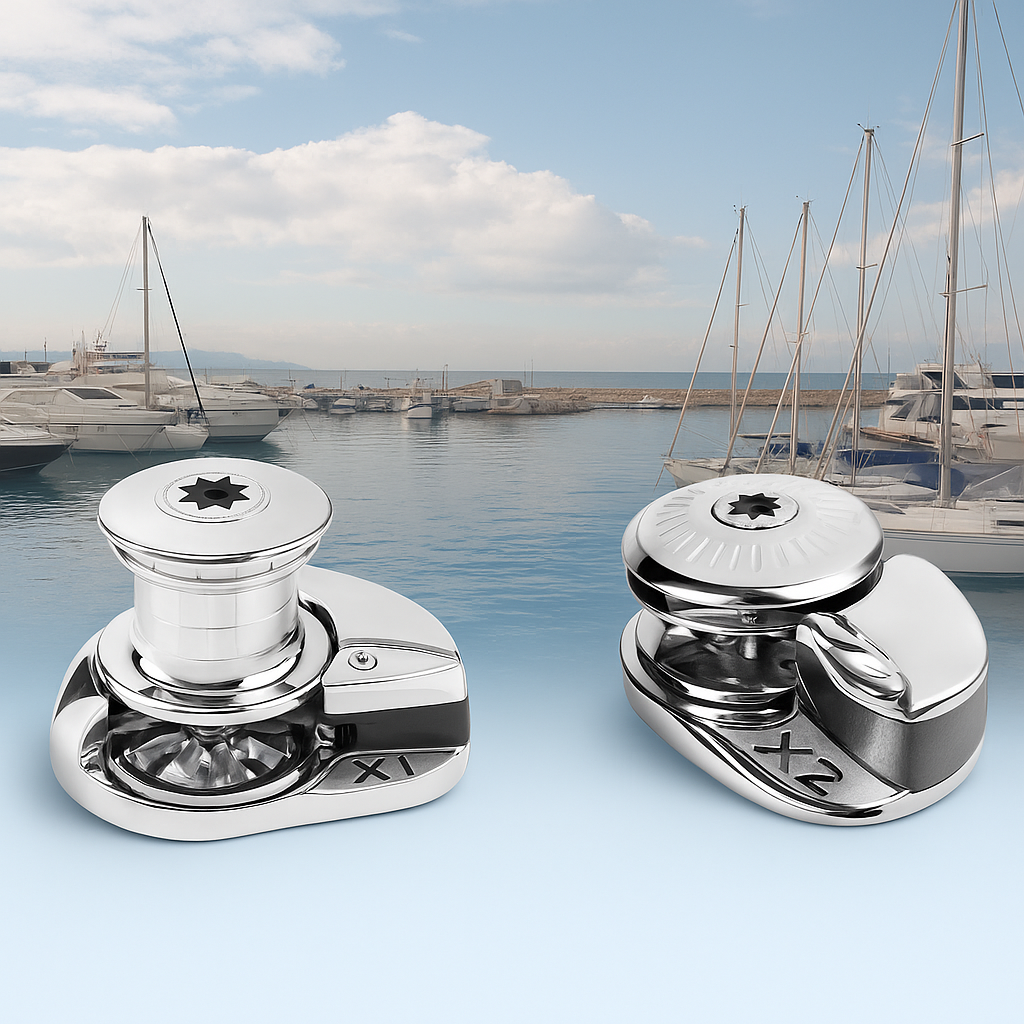
Popular examples include the X1, X2, X3 and SX series (SX1–SX7), as well as heavy-duty systems like Ercole and ZEUS.
Where they work best:
-
cruising and performance sailing yachts with adequate locker depth
-
motor yachts with a tall bow section
-
any boat where anchor chain should fall directly down, without long horizontal runs under deck

Horizontal windlasses

Horizontal units keep the motor and gearbox above deck, in the same housing as the gypsy.
Strengths:
-
Perfect for boats with shallow or awkwardly shaped lockers.
-
Easier to install on existing foredecks with limited access below.
-
Very service-friendly – most components are accessible without dismantling interior joinery.
Horizontal models in the Lofrans range include Royal, Dorado, Lion 1000, Cayman, Kobra, Tigres, Falkon, Titan, Ercole and Super Ercole.
Where they work best:
-
smaller cruisers and RIBs
-
boats with thin bow sections and little space under deck
-
refits where cutting new deck openings is undesirable
Vertical is not “better than” horizontal, and horizontal is not a “budget compromise”. When chosen correctly for the bow geometry, both layouts offer excellent reliability and working life.

Matching Lofrans families to real boats
To make all this more practical, let’s look at typical use cases.
These are not strict rules, but they reflect what we see in real projects.
Sailing yachts 30–45 ft
Most owners want a compact, reliable and quiet system that fits nicely into the bow area.
Common choices:
-
SX1, SX2 – modern vertical windlasses with a clean look and efficient chain handling.
-
X1, X2 – proven vertical models with rope/chain capability.
These units pair well with 8 or 10 mm chain, depending on displacement, and fit nicely into the anchor lockers of many production sailing yachts.
Motor yachts 40–60 ft
Motor yachts usually carry more chain and have higher windage, so they need more torque and a higher working load.
Typical solutions:
-
Cayman (horizontal) – ideal when the foredeck is relatively low and locker depth is limited.
-
Tigres and Falkon – horizontal powerhouses used on many classic flybridge and trawler designs.
-
Vertical options from the SX3–SX4 range where the bow allows it.
Here we often recommend 10 or 12 mm chain and 24 V systems to keep cable sizes under control.
Catamarans and wide-beam yachts
Catamarans present unique anchor-handling challenges: wide bridle arrangements, large windage and sometimes shallow chain lockers.
Depending on the design, Gaelix Marine Service may recommend:
-
a vertical SX model centrally placed, bringing chain into a deeper locker, or
-
a robust horizontal system like Kobra or Tigres mounted where deck access is easiest.
Mega yachts and serious workboats – ZEUS series
For vessels from roughly 45 m up to 120–130 m, Lofrans offers the ZEUS vertical windlass series, with working loads from 5,500 kg up to 12,000 kg and matching chain sizes.

These are fully engineered, heavy-duty systems that can be configured with:
-
dual gypsies
-
integrated warping drum
-
custom foundations and chain stoppers
-
AC or hydraulic drive systems
In this segment, Gaelix Marine Service works directly with shipyards, naval architects and captains to size, specify and supply complete anchoring packages.

Gypsies, chain and why original parts matter
The gypsy (chainwheel) is the interface between your investment in chain and the pulling power of the motor. Incorrect or poor-quality gypsies cause:
-
uneven wear and stretching of chain links
-
slipping under peak load
-
jamming when the chain is slightly rusty or fouled
-
noisy, jerky operation
Original Lofrans gypsies are machined to match specific chain pitch and diameter, galvanized or stainless as required, and tested under load. When we design a system at Gaelix Marine Service, we always confirm chain standard (DIN, ISO, calibrated etc.) to make sure the gypsy and chain work as a matched pair.
Common mistakes when choosing or installing a windlass
Over the years we keep seeing the same problems:
-
Choosing by length only – a heavy 40-footer on 10 mm chain cannot use the same windlass as a light 40-footer on 8 mm chain.
-
Ignoring voltage drop – long cable runs with undersized wires starve the motor, reduce torque and overheat the system.
-
Mounting too close to the bow roller – chain jumps or chews the cheeks of the bow roller under load.
-
Mixing chain types – using non-calibrated or different pitch than the gypsy was designed for.
-
Underestimating usage – charter boats often need a more powerful model than the “private owner” recommendation.
A professional check at the selection stage is always cheaper than replacing an under-powered windlass later.
How Gaelix Marine Service can help
As an official Lofrans windlass supplier, Gaelix Marine Service offers much more than simple sales:
-
help with model selection based on real displacement, chain size and anchoring style
-
guidance on vertical vs horizontal layouts for your specific bow and locker geometry
-
recommendations for 12 V vs 24 V or AC setups
-
complete kits with breakers, switches, control panels and deck hardware
-
support for installation and commissioning with shipyards and refit yards
-
worldwide supply of windlasses and original spare parts
Whether you run a small sailing yacht, a busy charter fleet, a private motor yacht or a mega yacht project, we can help you build an anchoring system that is powerful, safe and serviceable for many seasons.